Aynı Kişi, Farklı Zemin: Görünürlük Neden Kaybolur?
Original publication: source
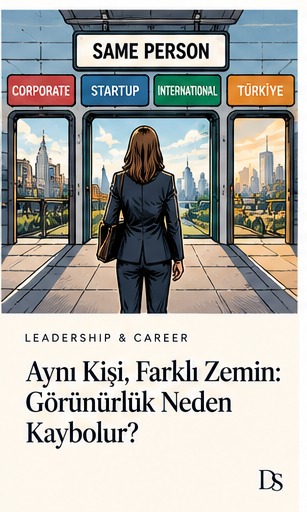
Same Person, Different Ground: Why Does Visibility Disappear?
I have been thinking about a distinction that is easy to miss: value does not necessarily disappear when visibility does. Something you have built, grown and given life to can continue to carry value even when the system around you no longer reflects it back.
After years inside an industry — close to decisions, outcomes and international markets — stepping outside that structure can produce a strange effect. You remain the same person. The experience is still there. So are the judgement and the instincts. Yet your visibility can change almost overnight.
Perhaps the issue was never simply a “talent gap”. Perhaps it is also about where organisations look for value, how they define it and what they are able to measure. The person creating value and the profile a system recognises are not always the same. When the ground changes, the language through which value is expressed changes with it.
This is why value may need to be treated less like an off-the-shelf product and more like tailoring. It has to fit the organisation, its context and its culture. A strong culture can explain what still fits when the ground shifts — and what needs to be altered.
If hiring and career systems remain copy-and-paste exercises, experienced people can become invisible even while their underlying value remains intact.
The ground will keep changing. The more useful question is how we translate what we have built into the context where value is now being created.
Aynı Kişi, Farklı Zemin: Görünürlük Neden Kaybolur?
Son zamanlarda kendimde fark ettiğim bir şey var: “değerli olanın” değeri ile ilgili. Değer kaybolmuyor. Yaratıp büyüttüğünüz, hayat verdiğiniz değer siz olsanız da olmasanız da yaşamını sürdürebiliyor. Ama görünmez hale gelebiliyor.
Yıllarca bir sektör sisteminin içinde, kararların alındığı ve sonuçların üretildiği yerlerde, kıtalar arası çalıştıktan sonra bir gün o sistemin dışına çıktığınızda ilginç bir şey oluyor. Aynı kişi olmaya devam ediyorsunuz. Aynı deneyim, aynı bakış açısı, aynı refleksler. Ama görünürlüğünüz kayboluyor.
Belki de mesele hiçbir zaman “yetenek açığı” değildi. Belki mesele şirketlerin değeri nerede ve nasıl ölçtüğüydü. Değer üreten insan ile sistemin gördüğü profil her zaman aynı kişi olmayabiliyor. Ve zemin değiştiğinde değerin ifadesi de değişiyor.
Belki de bugün asıl mesele şu: Değer, terzi işi olmalı. Şirketin üzerine göre dikilmeli. Zemin değiştiğinde neyin kısa, neyin uzun kaldığını ancak güçlü bir kültür açıklayabilir.
Eğer değer üretimi hâlâ fason bir anlayışla ilerliyorsa, işe alım ve kariyer süreçleri kopyala-yapıştır yapılıyorsa, o değerin görünür olması çok zor.
Zemin değişiyor ve değişmeye devam edecek. Ama değer gerçekten size göre dikilmişse ve bir kültürün parçasıysa hâlâ görülebilir. Peki siz? Zemin değiştiğinde kendinizi nasıl yeniden görünür kılıyorsunuz?
Same Person, Different Ground: Why Visibility Disappears
I have been thinking about the difference between value and the visibility of value.
Value does not simply disappear. What you have built, learned and developed can remain with you. Yet when you step outside the system in which that value was once recognised, it can become difficult for others to see.
The person is the same. The experience, perspective and professional reflexes remain. What changes is the ground on which they are interpreted.
Perhaps the issue is not always a talent gap. It may also be about where and how organisations measure value.
A person who creates value and the profile a system knows how to recognise are not necessarily the same. When the ground changes, the language through which value becomes visible changes with it.
This is why value may need to be understood more like something tailored than something mass-produced. Strong culture helps an organisation understand what fits, what needs to change and what should remain visible as the context shifts.