DAMLA SANBERK
MedTech Commercial Leadership & Advisory
|
Perspectives

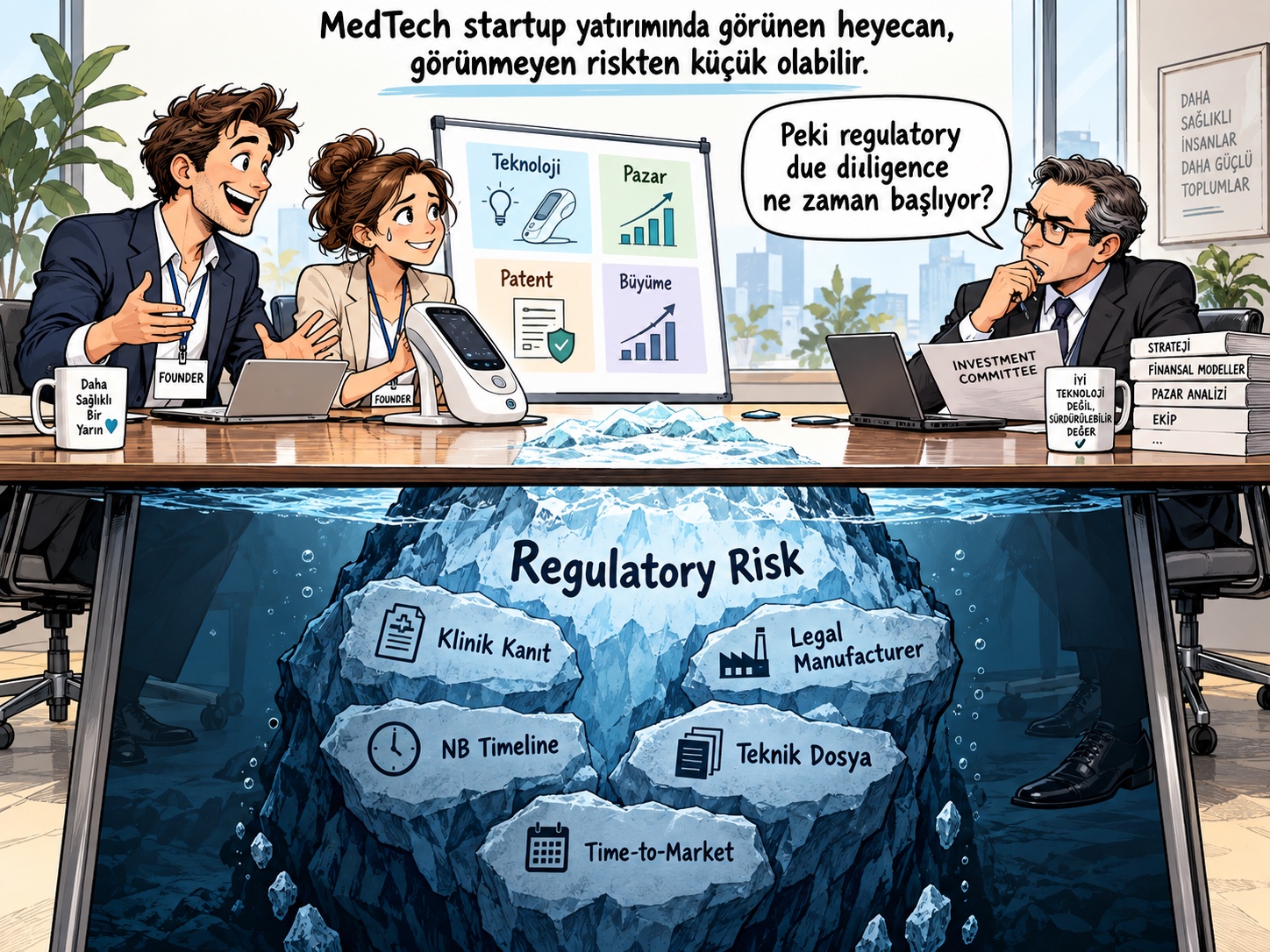
MDR 2026: Startup yatırımları için regulatory risk yatırım sonrası yönetilecek operasyonel bir risk mi, yoksa yatırım öncesinde fiyatlanması gereken ticari bir risk mi?

MDR 2026: Startup yatırımları için regulatory risk yatırım sonrası yönetilecek operasyonel bir risk mi, yoksa yatırım öncesinde fiyatlanması gereken ticari bir risk mi?

2026’daki MDR gelişmelerine startup yatırımları açısından baktığımda benim için asıl soru şu:

Bir ürünün regulatory pathway’i yatırım modeline ne zaman dahil edilmeli?

EUDAMED’in ilk dört modülünün zorunlu hale gelmesi görünürlüğü ve izlenebilirliği artırıyor. Notified Body süreçlerinde süre ve maliyet öngörülebilirliğini artırmaya yönelik yeni kurallar getiriliyor. Belirli Class IIb implantable well-established technologies için ise daha orantılı bir değerlendirme yolu açılıyor.

Bunlar startup’lar açısından olumlu gelişmeler. Ancak regulatory belirsizliği ortadan kaldırmıyor.

Yerleşik bir teknolojiden yararlanmak, bu teknolojiyle geliştirilen yeni ürünün regulatory yolunun da yerleşik olduğu anlamına gelmiyor. Intended purpose, klinik iddia, ürün kombinasyonu veya legal manufacturer yapısındaki değişiklikler ihtiyaç duyulan kanıtı, süreyi ve maliyeti değiştirebilir.

Yatırımcı açısından bunun karşılığı belirsizliktir; belirsizliğin ise bir maliyeti vardır.

Öngörülmemiş ilave bir klinik çalışma veya regulatory süreçteki gecikme yalnızca sertifikasyon bütçesini etkilemez. Ar-Ge takvimini ve pazara giriş tarihini değiştirebilir, sermaye ihtiyacını artırabilir ve bir sonraki finansman turunun zamanlamasını etkileyebilir.

Bu nedenle regulatory due diligence’ın yalnızca ürünün CE sürecini tamamlayıp tamamlayamayacağını incelemesi yeterli değildir. Regulatory yolun süresi ve maliyeti yatırım modelinde; ticarileşme sonrasında devam edecek yükümlülüklerin maliyeti ise operating plan içinde görülmelidir.

Hatta bir adım daha ileri gitmek gerekir.

Regulatory takvimdeki belirsizliğin yaratabileceği zaman sapmalarının finansal karşılığı da yatırım bütçesine dahil edilmelidir.

Çünkü birkaç aylık sapma yalnızca sertifikasyon tarihini değil; Ar-Ge harcamalarının devam süresini, runway’i, pazara giriş tarihini ve ihtiyaç duyulabilecek ek sermayeyi de değiştirir.

Testler, klinik kanıt, teknik dosya ve Notified Body süreci baştan modellendiğinde, regulatory milestone’ların aynı zamanda yatırımın zaman ve sermaye ihtiyacını belirleyen kilometre taşları olduğu daha açık görülür.

Bu yaklaşımın yatırım sonrasında da devam etmesi gerekir. Şirketin kendi regulatory ekibi olabilir veya bağımsız uzmanlardan destek alınabilir. Önemli olan regulatory yol haritasının Ar-Ge, bütçe ve ticari takvimle birlikte izlenmesidir.

Çünkü maliyet CE belgesinin alınmasıyla sona ermez. Teknik ve klinik dosyanın güncelliği, kalite sistemi ve ürün yaşam döngüsü boyunca devam eden yükümlülükler de işletme maliyetinin bir parçasıdır.

Bir MedTech startup’ında yatırım maliyetinin en fazla revizyona uğrayabileceği alanlardan biri, başlangıçta yeterince modellenmemiş regulatory süreç olabilir.

Buradaki değişiklik yalnızca sertifikasyon maliyetini değil; Ar-Ge süresini, klinik kanıt ihtiyacını, time-to-market’i, runway’i ve toplam sermaye ihtiyacını birlikte değiştirebilir.

Bu nedenle regulatory riskin yatırım öncesinde yalnızca tespit edilmesi değil, zaman ve maliyet belirsizliğiyle birlikte finansal modele dahil edilmesi ve yatırım sonrasında aynı model üzerinden izlenmesi gerektiğini düşünüyorum.

Perspectives

MDR 2026: For startup investments, is regulatory risk an operational risk to be managed after investment, or a commercial risk that should be priced in before investment?

Looking at the MDR developments in 2026 from the perspective of startup investment, the key question for me is this:

When should a product’s regulatory pathway be incorporated into the investment model?

The first four EUDAMED modules becoming mandatory increases visibility and traceability. New rules are being introduced to improve predictability around timelines and costs in Notified Body processes. For certain Class IIb implantable well-established technologies, a more proportionate assessment pathway is also being opened.

These are positive developments for startups. But they do not eliminate regulatory uncertainty.

Building on an established technology does not mean that the regulatory pathway for a new product developed with that technology is also established. Changes in intended purpose, clinical claims, product combinations or the legal manufacturer structure can alter the evidence required, the timeline and the cost.

For an investor, this translates into uncertainty — and uncertainty has a cost.

An unforeseen additional clinical study or a delay in the regulatory process affects more than the certification budget. It can shift the R&D timeline and market-entry date, increase capital requirements and affect the timing of the next funding round.

For this reason, regulatory due diligence should not be limited to assessing whether a product can complete the CE process. The duration and cost of the regulatory pathway should be reflected in the investment model, while the cost of ongoing obligations after commercialization should be visible in the operating plan.

In fact, it is worth going one step further.

The financial impact of potential timing deviations created by uncertainty in the regulatory timeline should also be incorporated into the investment budget.

A delay of several months affects more than the certification date. It can extend the period of R&D expenditure, change the runway and market-entry date, and increase the amount of additional capital that may be required.

When testing, clinical evidence, technical documentation and the Notified Body process are modelled from the outset, it becomes clearer that regulatory milestones are also milestones that determine the investment’s timing and capital requirements.

This approach should continue after the investment. A company may have its own regulatory team or may work with independent specialists. What matters is that the regulatory roadmap is monitored together with the R&D, budget and commercial timelines.

Because the cost does not end when the CE certificate is obtained. Keeping technical and clinical documentation up to date, maintaining the quality system and meeting obligations throughout the product lifecycle are also part of the operating cost.

In a MedTech startup, one of the areas in which the investment cost may require the greatest revision is a regulatory process that was not sufficiently modelled at the outset.

Such a change can affect not only certification cost, but also R&D duration, clinical evidence requirements, time-to-market, runway and total capital requirements at the same time.

This is why I believe regulatory risk should not only be identified before investment, but incorporated into the financial model together with its time and cost uncertainty — and then monitored against that same model after the investment.