DAMLA SANBERK
MedTech Commercial Leadership & Advisory
|
Perspectives

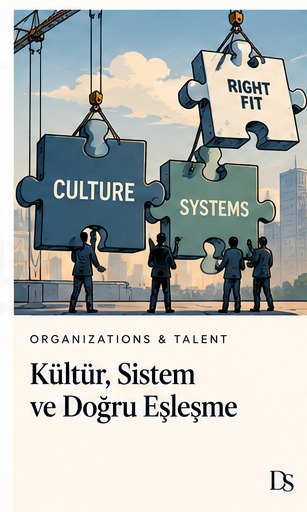
Kültür, sistem ve doğru eşleşme

Kültür, sistem ve doğru eşleşme

Yapı kültürünü çoğu zaman değerler üzerinden tarif ederiz.

Bu kolaydır.

Ancak bir organizasyonun içinde gerçekten olan, başka bir yerde oluşur.

Çünkü kültür; yazılan, anlatılan ya da anlaşılmaya çalışılan bir şey değil, tekrar eden davranışların ve onların ürettiği sonuçların toplamıdır.

Ve bu davranışlar, niyetlerle değil, uygulanabilen sistemlerle şekillenir.

Kararların nasıl alındığı,
performansın nasıl ölçüldüğü,
neyin ödüllendirildiği…

Bir yapı, beyanı gibi değil, içinde sorumluluk alan insanların çalıştığı gibi davranır.

Bu yüzden birçok organizasyonda benzer çelişkiler oluşur:

Hızdan bahsedilir ama süreçler yavaştır.
Şeffaflık konuşulur ama hata görünür olduğunda maliyetlidir.
Takım çalışması vurgulanır ama ödül sistemi bireyseldir.

Bu bir çelişkidir.

Ve çoğu zaman, üzerinde düşünülmeden kurulmuş çalışma şekillerinin sonucudur.

İnsanlar bir yapının içinde söyleneni değil, sistemin gerçekten neyi optimize ettiğini hızlıca gözlemler ve öğrenir.

Ve zamanla davranışlar, niyete değil, olana hizalanır.

Bu noktada çoğu kurum aynı soruyu sorar:

“Doğru şeyi anlatıyoruz ama neden istediğimiz olmuyor?”

Cevap basittir:

Anlatmak yetmez.
Davranış tasarlanmalıdır.

Ama burada daha zor bir gerçek vardır:

Her davranış problemi bir sistem problemi değildir.

Bazen mesele, insan ile bağlam arasındaki uyumsuzluktur.

En iyi tasarlanmış sistem bile, yanlış eşleşmede sonuç üretmez.

Bu yüzden bir organizasyonun en kritik ama en az tasarlanan alanı, eşleşmedir.

Kimi, neye göre seçiyoruz?
Kimi, neye göre tutuyoruz?
Kime, neye göre yatırım yapıyoruz?

Bugün birçok yapıda bu soruların cevabı yoktur.

Çünkü eşleşme, kalite standartları gereği bir insan kaynakları departmanı içinde departman hedefleri kapsamında bir süreç olarak ele alınır.

Oysa eşleşme bir süreç değil, bir kültürdür.

Ve kültürler yapıya göre terzi dikim doğal davranış sonuçlarıdır; birebir kopyalanamaz.

Kopyalanmamalıdır.

Nedensellikleri anlaşılmalı, içindeki sistem derinleştirilmelidir.

Bu yüzden insan kaynaklarının işe alım süreçlerinde ve kariyer atlama süreçlerinde gerçekleştirdiği eşleşme sınavları, skorları, aşamaları ve değerlendirmeleri kendi kültürü içinde tasarlanmalıdır.

Her organizasyonun yapısı, ritmi, beklentisi ve gerilimi farklıdır.

Dolayısıyla doğru eşleşme kriterleri de farklı olmak zorundadır.

Tepeden inme tanımlanan, başka yapılardan kopyalanan değerlendirme sistemleri kaçınılmaz olarak yanlış eşleşmeler üretir.

Ve yanlış eşleşmeler, en iyi sistemi bile işlevsiz hale getirir.

Bu yüzden eşleşme, terzi dikim tasarlanmalıdır.

Ve bu tasarım, bir defalık değil, yaşayan bir sistem olmalıdır.

Sonuç olarak:

Kültür konuşularak kurulmaz.
Sistemle şekillenir.
Ama sistemin çalışması için, doğru eşleşme gerekir.
Ve eşleşme doğru değilse, hiçbir sistem sürdürülebilir sonuç üretmez.

En önemlisi, AI ajanlarının iş süreçlerine bu denli dahil olduğu bir dönemde, yapıların kendi değerlendirme ve eşleşme kültürlerine hâkim olması artık bir tercih değil, bir gerekliliktir.

Perspectives

Culture, Systems and Co-Creation

We often describe organizational culture through values.

That is the easy part.

What actually happens inside an organization, however, is shaped somewhere else.

Because culture is not what is written, communicated or interpreted. It is the sum of repeated behaviours and the outcomes they produce.

And those behaviours are shaped not by intentions, but by systems that can actually be put into practice.

How decisions are made,
how performance is measured,
what is rewarded…

An organization behaves not as it declares it will, but according to how the people who carry responsibility within it actually work.

This is why similar contradictions emerge in many organizations:

Speed is emphasized, but processes are slow.
Transparency is discussed, but making mistakes visible comes at a cost.
Teamwork is promoted, but the reward system is individual.

This is a contradiction.

And it is often the result of ways of working that were established without being consciously designed.

People quickly observe and learn not what an organization says, but what its system actually optimizes for.

Over time, behaviour aligns not with intention, but with what actually happens.

At this point, many organizations ask the same question:

“We are communicating the right things, so why are we not getting the outcome we want?”

The answer is simple:

Communication is not enough.
Behaviour has to be designed.

But there is a more difficult reality here:

Not every behavioural problem is a systems problem.

Sometimes the issue is a mismatch between the person and the context.

Even the best-designed system will fail to produce results when the match is wrong.

That is why one of the most critical, yet least deliberately designed areas of an organization is matching.

Who do we select, and on what basis?
Who do we retain, and on what basis?
Who do we invest in, and on what basis?

In many organizations today, there is no clear answer to these questions.

Matching is often treated as a process within the Human Resources function, carried out within departmental objectives and quality standards.

But matching is not merely a process. It is part of culture.

And cultures are tailor-made outcomes of the natural behaviours produced by a particular organizational structure; they cannot simply be copied.

Nor should they be.

Their causal relationships need to be understood, and the systems within them need to be developed in greater depth.

This is why the assessments, scores, stages and evaluations used by Human Resources in recruitment and career progression should be designed within the organization’s own culture.

Every organization has a different structure, rhythm, set of expectations and sources of tension.

The criteria for the right match therefore have to be different as well.

Top-down assessment systems copied from other organizations inevitably produce mismatches.

And mismatches can render even the best system ineffective.

That is why matching needs to be tailor-made.

And that design should not be a one-off exercise, but a living system.

In conclusion:

Culture is not built by talking about it.
It is shaped by systems.
But for a system to work, the right match is required.
And when the match is wrong, no system can produce sustainable results.

Most importantly, at a time when AI agents are becoming so deeply integrated into business processes, organizations can no longer treat mastery of their own evaluation and matching culture as optional. It has become a necessity.