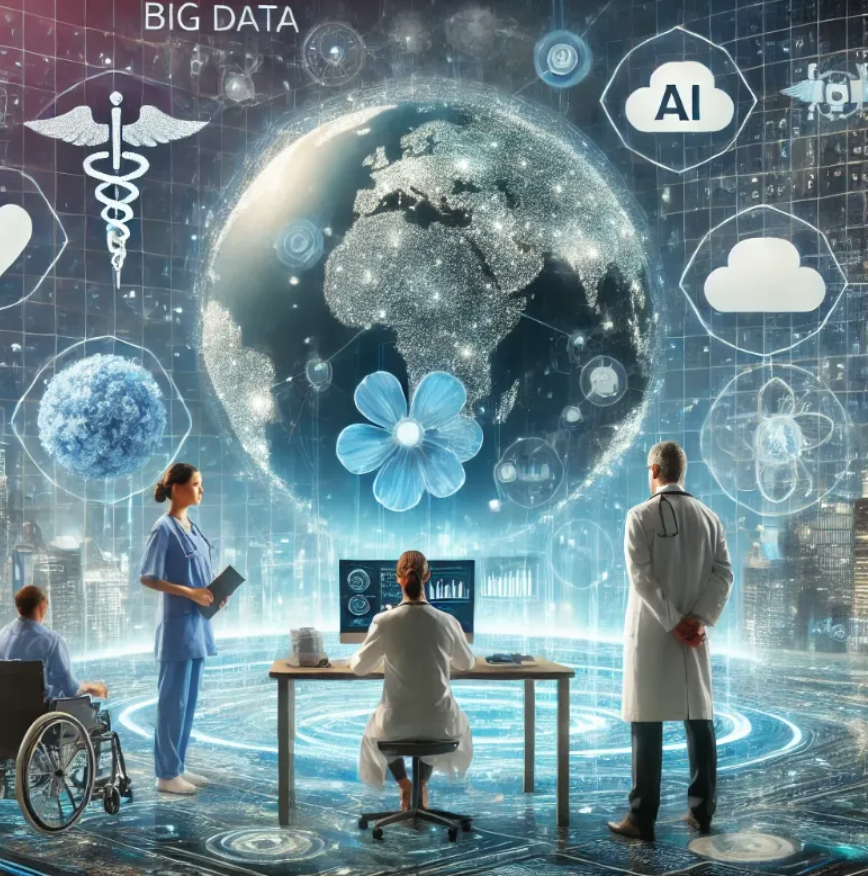
**Harnessing Big Data and Cloud Systems: Revolutionizing Healthcare with Innovation, Precision, and Global Impact**

**Table of Contents:**

1. **Introduction**

- The Digital Transformation of Healthcare
- The Transformative Role of Big Data and Cloud Systems in Healthcare
- The Importance of Regulations: FDA, MDR, NMPA, and SFDA

1. **What is Big Data and How is it Collected?**

- Electronic Health Records (EHR)
- Medical Imaging Data
- Genetic Data and Patient Monitoring Devices

1. **What is a Cloud System?**

- Cloud Computing and Healthcare Services
- Cloud System Service Models (IaaS, PaaS, SaaS)

1. **Data Security and Privacy: Benefits of Cloud Systems**

- Data Encryption and Security
- Backup and Recovery Systems
- Access Control and Patient Privacy

1. **Medical Imaging and Data Analysis: Before and After Cloud Systems**

- The Impact of Big Data on Medical Imaging
- AI, Big Data, and False Positive/Negative Cases
- The Role of Regulatory Bodies

1. **The Use of Big Data and Cloud in Healthcare Technologies**

- Big Data in Personalized Medicine
- Examples from Philips HealthSuite and IBM Watson Health
- Applications of Big Data and Cloud Technologies in Healthcare

1. **Regulations by FDA, MDR, NMPA, and SFDA for Medical Devices Utilizing Big Data and Cloud Systems**

- FDA, MDR, NMPA, and SFDA Standards and Guidelines
- Differences in Regulatory Processes for Medical Devices and Platforms
- Case Study: An Example of a European Medical Device Entering the Chinese Market

1. **Economic Impact, Competitive Advantage, and Investment Opportunities**

- Operational Efficiency and Cost Savings
- Innovation and Development in Personalized Medicine
- Efficiency in Healthcare Services with Telemedicine and Remote Patient Monitoring
- Competitive Advantage and Technological Differentiation
- Investment Opportunities and the Startup Ecosystem

1. **Conclusion: The Future of Big Data and Cloud Systems**

- Human Experience and Technological Integration
- Human-Centered Data Management and Ethical Approach
- The Importance of Global Knowledge and Workforce Sharing
- The Balance Between Human Experience and Technological Solutions

**1. Introduction**

The healthcare industry is undergoing a profound transformation, thanks to advancements in digital technologies. Big data and cloud systems are key enablers of this transformation. Big data allows for the analysis of vast data sets, while cloud systems enable the storage and processing of this data more efficiently. These technologies play a critical role in speeding up disease diagnosis, personalizing treatment processes, and increasing the overall efficiency of healthcare services.

Moreover, regulatory bodies at the international level have made it mandatory for medical devices to comply with these technologies. Organizations such as the FDA, MDR, NMPA, and SFDA implement strict regulations to ensure the safety and accuracy of devices using big data. This article comprehensively examines the impact of big data and cloud technologies in healthcare, the regulations surrounding these technologies, and their effects on device manufacturing and market entry, both positive and negative.

**2. What is Big Data and How is it Collected?**

Big data refers to the collection, analysis, and utilization of vast amounts of structured and unstructured data sets to derive meaningful insights for healthcare. In the healthcare sector, big data includes patient records, medical images, laboratory results, genetic data, and data from patient monitoring devices. These data sets play a key role in improving healthcare services.

**Big Data Collection Methods:**

- **Electronic Health Records (EHR):** Digital systems that store patients’ medical histories, prescriptions, and lab results.
- **Medical Imaging:** Data obtained from imaging devices like MR, CT, and endoscopy machines.
- **Genetic Data:** Information gathered from DNA sequencing and genetic testing.
- **Patient Monitoring Devices and IoT:** Continuous data collection through wearable devices and IoT-based solutions.

**3. What is a Cloud System?**

Cloud computing is a technology that enables data storage on remote servers instead of physical servers and allows access to this data via the internet. In the healthcare sector, cloud systems ensure the secure storage, processing, and sharing of data, providing flexibility for both healthcare professionals and patients.

**Cloud System Service Models:**

- **IaaS (Infrastructure as a Service):** Healthcare organizations procure infrastructure and storage services from cloud providers.
- **PaaS (Platform as a Service):** Provides software development and analytics platforms.
- **SaaS (Software as a Service):** Healthcare professionals access cloud-based EHR systems and patient management platforms.

**4. Data Security and Privacy: Benefits of Cloud Systems**

Cloud systems ensure the secure and confidential storage of healthcare data. Health data is protected in accordance with international data protection laws, such as GDPR and HIPAA, which mandate the secure storage of big data, especially in the healthcare sector.

- **Data Encryption:** Advanced encryption methods are used to protect data against cyber-attacks.
- **Backup and Recovery:** Regular backups are made to prevent data loss, and data can be restored if necessary.
- **Access Control:** Data access is restricted based on the permissions of healthcare professionals, which enhances patient data privacy.

**4.1 Medical Imaging and Data Analysis: Before and After Cloud Systems**

In the healthcare sector, medical imaging devices (e.g., MRI, CT scans, endoscopic imaging) generate large amounts of data with each procedure. Before cloud systems, this data was stored on local servers, and the analysis process was time-consuming. Local servers had limited capacity, and processing speeds were slow. Cloud systems have completely transformed this process. Now, medical images are stored on centralized cloud platforms, where they can be analyzed much faster. This allows doctors to access and analyze data instantly, significantly speeding up the diagnostic process.

Let’s delve deeper into this topic.

Previously, when medical images were stored on local servers, the process of storing and analyzing data was both time-consuming and required more manual intervention due to limited resources. With cloud systems, medical data is now stored on centralized servers, allowing for real-time analysis. AI (Artificial Intelligence) algorithms can now evaluate this data using big data analytics methods, enabling quick diagnoses.

**False Positive and False Negative Results:**

It is important to recognize that AI systems analyzing medical imaging data can sometimes produce false positives (incorrectly diagnosing a condition that isn’t present) and false negatives (failing to identify an existing condition).

- **False Positive:** This refers to diagnosing a disease in a patient when they do not actually have the condition. This can lead to unnecessary treatments. For example, a false positive result in a cancer screening could lead to unnecessary emotional distress and financial burden due to treatments for a non-existent condition.
- **False Negative:** This refers to failing to detect a condition when it is present. For instance, missing cancerous cells in a scan could result in delayed treatment and allow the disease to progress.

The key point here is that big data and AI algorithms must work to minimize these errors. While algorithms are effective in analyzing data, they are not perfect and can still make mistakes. Therefore, it is crucial that medical AI solutions are continuously improved and refined. Additionally, regulatory bodies (e.g., FDA, MDR) must regularly monitor and verify the accuracy of these systems, ensuring that devices undergo thorough clinical testing before entering the market. Ensuring the safety of patients through these clinical trials is of paramount importance.

**5. The Use of Big Data and Cloud Systems in Healthcare Technologies**

Understanding how big data and cloud systems are utilized by medical device manufacturers and how they are transforming treatment processes is crucial. Big data and cloud solutions not only enhance efficiency in healthcare services but also personalize treatment processes. Personalized medicine aims to offer more specific treatment methods based on the patient’s genetic and clinical data. This approach not only accelerates disease diagnosis but also enables the development of individualized treatment protocols.

***Deep Dive:***

**Philips HealthSuite:**\
Philips HealthSuite is a cloud-based platform designed to securely store and analyze patients’ health data. Data can be collected from various sources (medical devices, patient records, imaging systems, etc.). This data is stored and analyzed within cloud systems. The main advantage of Philips HealthSuite is the secure sharing of data, enabling doctors to make faster and more accurate diagnoses. For example, if a patient is treated by multiple doctors, these doctors can instantly access the patient’s medical history through this platform and develop a coordinated treatment plan.

**IBM Watson Health:**\
IBM Watson Health offers AI-powered big data solutions and has achieved significant success in diagnosing and treating complex diseases like cancer. Watson analyzes large datasets, including genetic data, medical histories, and treatment results. These data are processed by AI algorithms to develop personalized treatment plans. Watson, as one of the leading examples of personalized medicine, uses clinical data to make faster and more accurate diagnoses while suggesting treatment options.

The critical point here is how big data and cloud technologies enhance efficiency and accuracy in healthcare. Platforms like Philips HealthSuite and IBM Watson Health assist doctors in making more informed, data-driven decisions during treatment processes. Additionally, these systems enable the integration of patient health data from various sources, allowing for detailed analysis specific to each patient.

The concept of personalized medicine becomes particularly important at this juncture. For example, diseases like cancer develop differently in each patient, and responses to treatment can vary from person to person. AI systems like Watson consider these differences and offer the most appropriate treatment options tailored to each patient.

However, big data solutions must be continuously updated, and infrastructure needs to be strengthened to handle growing data volumes. While cloud systems provide flexibility in this regard, they also introduce risks concerning data security and privacy. Therefore, data security and privacy must remain top priorities. Large platforms such as Philips and Watson must adhere to stringent security protocols to protect patient data.

In summary, big data and cloud systems play a transformative role in medical imaging and treatment processes, and continuous development is necessary to minimize errors. At the same time, personalized medicine is set to have a significant impact on the future, with data security needing to remain at the forefront.

**Notable Platforms:**

1. **Philips HealthSuite**

- **Provider:** Philips
- **Focus:** Secure storage and analysis of health data, accelerating healthcare services. This platform enables doctors to make accurate and rapid diagnoses by collecting patient data from various sources.

1. **IBM Watson Health**

- **Provider:** IBM
- **Focus:** AI-powered big data solutions offering personalized treatment for complex diseases like cancer. Watson analyzes patients’ genetic and clinical data, optimizing treatment processes.

1. **Google Cloud Healthcare API**

- **Provider:** Google
- **Focus:** Ensures secure processing of healthcare data. Enables analysis, sharing, and storage of medical data in a compatible format, while supporting AI and machine learning solutions.

1. **Microsoft Azure for Healthcare**

- **Provider:** Microsoft
- **Focus:** Securely stores and processes health data through cloud-based infrastructure. Azure offers AI-powered healthcare solutions that analyze patient data, evaluate imaging results, and personalize healthcare services.

1. **Cerner Health**

- **Provider:** Cerner
- **Focus:** Manages Electronic Health Records (EHR) and improves healthcare services through big data analytics. Cerner collects and analyzes patient data, enabling healthcare professionals to make faster decisions.

1. **GE Health Cloud**

- **Provider:** GE Healthcare
- **Focus:** A cloud-based platform designed to store, analyze, and share medical imaging data among healthcare professionals. This platform centralizes imaging data and facilitates its analysis.

1. **Oracle Health Sciences Cloud**

- **Provider:** Oracle
- **Focus:** Cloud-based solutions for biopharmaceutical and clinical research. Uses big data analytics and AI to analyze clinical trial data and accelerate drug development processes.

1. **Siemens Healthineers Digital Ecosystem**

- **Provider:** Siemens Healthineers
- **Focus:** A cloud-based platform that analyzes data collected from medical devices and allows for the sharing of this data. Healthcare professionals can access patient data, share imaging results, and analyze them through this platform.

1. **Amazon Web Services (AWS) HealthLake**

- **Provider:** Amazon
- **Focus:** AWS HealthLake securely stores, processes, and analyzes health data using big data and machine learning technologies. It allows healthcare providers to easily analyze data and improve decision-making processes.

1. **Medtronic Care Management Services (MCMS)**

- **Provider:** Medtronic
- **Focus:** Medtronic’s cloud-based solution provides remote patient monitoring and data management for patients with chronic illnesses. This platform enables healthcare professionals to monitor patients remotely and make data-driven decisions.

These platforms integrate healthcare data with big data and AI solutions, enabling secure and rapid analysis. Philips HealthSuite and IBM Watson Health are notable examples of big data analytics and AI solutions in healthcare. Additionally, major tech companies like Amazon, Google, Microsoft, and Oracle have developed platforms dedicated to healthcare services. These systems offer various solutions to both large healthcare institutions and individual healthcare providers, accelerating the digital transformation of healthcare services.

**6. Regulations by FDA, MDR, NMPA, and SFDA for the Use of Big Data and Cloud Systems in Medical Devices**

The integration of big data and cloud systems with medical devices has transformed healthcare in terms of data management, analysis, and security. However, these platforms must comply with strict regulatory standards to ensure the safety, accuracy, and privacy of data when used with medical devices. Regulatory bodies, including the FDA, MDR, NMPA, and SFDA, have established stringent rules to ensure the reliability of these platforms and the devices they integrate with.

**1. Standards and Rules for Security, Accuracy, and Data Privacy**

**FDA (U.S. Food and Drug Administration) — United States**

- **Data Security and Privacy:** The FDA mandates that cloud-based healthcare systems and big data platforms comply with HIPAA (Health Insurance Portability and Accountability Act) to ensure the privacy of patient data. These platforms must implement strong security measures, including encryption, access control, and data backup to protect against unauthorized access.
- **Algorithm Accuracy:** The FDA requires that big data and AI solutions undergo clinical validation processes. AI algorithms classified under SaMD (Software as a Medical Device) must pass FDA-approved clinical tests, proving their accuracy in diagnostic and treatment decisions.
- **Continuous Monitoring and Updates:** Post-market surveillance is required by the FDA to ensure continued performance and accuracy. Developers must provide ongoing reports to maintain the safety and reliability of their platforms.

**MDR (Medical Device Regulation) — European Union**

- **Data Security and GDPR Compliance:** MDR enforces full compliance with GDPR (General Data Protection Regulation), ensuring that healthcare data is stored, processed, and shared securely within the European Union. GDPR requires explicit patient consent for data processing and mandates the secure handling of personal data.
- **Clinical Data Requirements:** MDR requires that medical devices integrated with cloud systems be validated through clinical data before being introduced to the market. AI-based systems that use big data must be tested for accuracy and safety during clinical trials.
- **CE Mark and Compliance Process:** Platforms utilizing big data must acquire a CE Mark to enter the European market. This process involves detailed evaluations to verify the platform’s reliability and safety.

**NMPA (National Medical Products Administration) — China**

- **Data Localization:** NMPA requires that healthcare data collected in China be stored in local data centers. This prevents cloud-based healthcare platforms from storing data outside China, ensuring compliance with data localization requirements.
- **Algorithm Validation:** AI and big data solutions must undergo validation with clinical data to meet NMPA’s regulatory standards. The algorithms are assessed for accuracy and reliability under local regulations.

**SFDA (Saudi Food and Drug Authority) — Saudi Arabia**

- **Local Data Storage:** SFDA mandates that healthcare data collected in Saudi Arabia be stored within the country’s local data centers. Cloud systems must comply with this requirement, ensuring patient data privacy is safeguarded within national boundaries.
- **Data Security:** SFDA places great emphasis on the cybersecurity of healthcare data. Platforms must implement stringent encryption and security protocols to protect patient information.

**2. Differences in Regulatory Processes for Medical Devices and Platforms**

Big data and cloud platforms, when integrated with medical devices, undergo distinct regulatory processes compared to the devices themselves. Here are the key differences:

**Medical Devices:**

- **Clinical Impact and Physical Safety:** Medical devices directly affect patients and must undergo more rigorous clinical testing by bodies like the FDA and MDR. Safety factors such as biocompatibility, electrical safety, and physical integrity are crucial evaluation criteria.
- **Risk Management and Classification:** Medical devices are classified based on their potential to cause harm (low, medium, or high risk). Higher-risk devices (e.g., pacemakers) face more stringent testing and longer approval processes.

**Big Data and Cloud Platforms:**

- **Algorithm Accuracy and Data Security:** The primary focus for platforms is the accuracy of their algorithms and the security of patient data. These platforms do not directly interact with patients but support diagnosis and treatment decisions through data analysis.
- **Data Privacy and Compliance:** Platforms are primarily regulated for data privacy and security compliance. They must fully adhere to regulations such as HIPAA and GDPR, and their algorithms must be continuously validated with clinical data.
- **Algorithm Development and Updates:** Big data platforms must be continuously updated, with algorithms refined using new datasets. Regulatory bodies monitor the transparency and evolution of these algorithms to ensure continued accuracy and safety.

**3. Case Study: Use of a European-Manufactured Medical Imaging Device with an American Platform in the Chinese Market**

**Scenario:**\
A medical imaging device manufactured in a European country is to be integrated with an American-based big data and cloud platform (e.g., IBM Watson Health). While already used in Europe and the U.S., the device and platform aim to enter the Chinese market. This requires compliance with both local medical device and platform regulations.

**Key Considerations:**

1. **Applications for the European and U.S. Markets:**

- **CE Mark and MDR:** The device must first obtain a CE Mark to comply with MDR standards. It must undergo clinical testing to ensure safety and accuracy, with additional requirements for GDPR compliance in the platform.
- **FDA Approval and HIPAA Compliance:** The American platform must be FDA-approved and fully HIPAA-compliant, ensuring the secure handling and storage of patient data. The device must be validated with clinical data to meet FDA standards.

1. **Regulatory Requirements for Entering the Chinese Market:**

- **NMPA Approval:** To be sold and used in China, the device must receive NMPA approval. The device must comply with local regulations, and its safety and effectiveness must be validated through clinical trials in China.
- **Data Localization Requirement:** The American platform must comply with China’s data localization requirements, meaning that all healthcare data collected in China must be stored locally. The platform may need to establish data centers in China or partner with a local cloud provider to meet this requirement.
- **Algorithm Validation:** AI algorithms used by the platform must be validated using local Chinese clinical data, ensuring compliance with NMPA regulations.

1. **Potential Challenges:**

- **Compliance Costs:** Ensuring compliance with regulatory requirements across Europe, the U.S., and China could be costly. Different regulatory bodies have unique demands, adding complexity to clinical testing and validation.
- **Data Localization Issues:** China’s data localization laws may require the American platform to adapt its infrastructure or collaborate with local providers, increasing operational costs.
- **Regulatory Differences:** The regulatory landscape for medical devices and big data platforms differs significantly between Europe, the U.S., and China. These discrepancies in standards may lead to time-consuming approvals and additional validation processes, particularly for algorithms.

**Conclusion:**\
In this case, the European-manufactured medical imaging device and the American big data platform must obtain NMPA approval before entering the Chinese market. Additionally, the platform must meet data localization requirements and validate its algorithms with local data. These steps can lead to increased costs and challenges in ensuring regulatory compliance across different regions.

This case study illustrates the complexity of navigating regulatory environments in different countries, particularly when integrating medical devices with big data platforms. The key differences lie in the focus on data security, algorithm accuracy, and privacy for platforms, and the emphasis on physical safety and clinical impact for devices.

**7. Economic Impacts, Competitive Advantage, and Investment Opportunities**

The economic impacts of big data and cloud technologies in the healthcare sector vary for manufacturers, collaborative production companies, and countries that consume these technologies. Regulatory processes and associated costs also contribute to these effects. Below, we assess each point from these perspectives.

**1. Increased Operational Efficiency and Cost Savings**

Big data and cloud systems improve data processing and management in the healthcare sector, resulting in increased operational efficiency. This enables healthcare organizations to provide more effective services at lower costs.

**From a Manufacturer’s Perspective:**

- **Cost Reduction:** By using cloud systems, device manufacturers can save on physical server costs by moving data storage and analysis to cloud-based systems. Development and operational costs are shifted to cloud providers, leading to savings on hardware expenses.
- **Faster Innovation:** Manufacturers can leverage big data analytics to rapidly develop prototypes and conduct market tests. This accelerates the product development cycle and provides a competitive advantage.

**From a Collaborative Production Perspective:**

- **Collaboration Opportunities:** Companies working collaboratively can use cloud systems and big data analytics to enhance international data sharing and enable remote work. This allows multinational companies to integrate research and development processes, reducing costs.
- **R&D Cost Efficiency:** Joint R&D efforts become more efficient with big data. Data sharing and analysis processes between collaborators are streamlined, making it easier to share R&D costs.

**For Countries Without Advanced Technology:**

- **Affordable Access:** Developing countries can access big data and cloud technologies at lower costs through cloud providers, without needing to invest heavily in big data infrastructure.
- **Digitalization of Healthcare Services:** Cloud-based solutions accelerate the digitalization of healthcare in these countries, enabling faster diagnosis and treatment processes.

**Regulatory Processes and Costs:**

- **Security and Compliance Costs:** Big data and cloud solutions must comply with data privacy regulations such as GDPR and HIPAA, which increases compliance costs. Manufacturers and collaborative companies must invest to meet the different data privacy regulations across countries.

**2. Innovation and Development in Personalized Medicine**

Big data analytics contributes to the development of personalized medicine by analyzing genetic and clinical data, enabling the creation of patient-specific treatment processes.

**From a Manufacturer’s Perspective:**

- **High R&D Costs:** Manufacturers developing personalized medicine devices and systems must invest heavily in big data and genetic analysis. However, these products can be sold at higher prices, offering significant revenue opportunities.
- **Patent Advantages:** Innovation in this area can provide manufacturers with patent protection, resulting in a competitive advantage and higher profit margins.

**From a Collaborative Production Perspective:**

- **R&D Collaboration:** Companies collaborating in the personalized medicine sector benefit from more efficient R&D processes by leveraging big data analytics and genetic research. Sharing knowledge and data accelerates research.
- **Innovation Sharing:** Collaboration fosters faster innovation in personalized medicine. The rapid introduction of innovations to the market provides cost advantages to companies involved in such partnerships.

**For Countries Without Advanced Technology:**

- **Lower Treatment Costs:** Personalized medicine optimizes treatment processes tailored to the patient, reducing incorrect treatments and repeat testing, ultimately lowering healthcare costs.
- **Faster Access to Treatment:** Developing countries can gain access to advanced medical solutions through these technologies, improving the quality of healthcare services.

**Regulatory Processes and Costs:**

- **Clinical Trial Requirements:** Personalized medicine solutions require extensive clinical trials to gain approval from regulatory bodies in different countries. This is often a costly process, creating financial challenges for both manufacturers and their collaborators.

**3. Cost-Effective Healthcare Services with Telemedicine and Remote Patient Monitoring**

Telemedicine and remote patient monitoring solutions, supported by big data and cloud technologies, allow healthcare services to reach wider populations more cost-effectively.

**From a Manufacturer’s Perspective:**

- **Wider Market Opportunities:** Manufacturers can market telemedicine and remote monitoring devices to a broader audience, particularly in developing countries, where there is high demand for these products. This opens new revenue streams.
- **Security and Compliance Costs:** Remote monitoring devices must comply with data security regulations, such as HIPAA. Manufacturers will need to invest in additional security measures, increasing costs.

**From a Collaborative Production Perspective:**

- **Jointly Developed Solutions:** Multinational companies can collaborate to develop telemedicine and remote patient monitoring solutions. Big data and cloud systems enable the creation of international monitoring solutions, allowing for shared R&D costs.

**For Countries Without Advanced Technology:**

- **Lower-Cost Access:** Remote monitoring and telemedicine services provide lower-cost access to healthcare for countries that lack advanced technologies. This is particularly beneficial for patients in rural areas.
- **Investment Requirements:** These countries may need to invest in internet infrastructure and data security systems. Without such investments, remote monitoring systems may not be fully effective.

**Regulatory Processes and Costs:**

- **Data Privacy and Security:** These systems must comply with stringent regulations for data privacy (HIPAA, GDPR) and security. Manufacturers and collaborators must invest in encryption, authorization, and security processes to ensure compliance.

**4. Competitive Advantage and Technological Differentiation**

Healthcare companies that effectively utilize big data and cloud technologies gain a competitive advantage and differentiate themselves technologically in the marketplace.

**From a Manufacturer’s Perspective:**

- **Technological Differentiation:** Manufacturers can stand out in the market by using big data and cloud solutions. For instance, devices supported by AI offer faster diagnosis and treatment, allowing them to be marketed as high-tech products.
- **Competitive Pricing:** Increased efficiency and cost savings enable manufacturers to price their products competitively, leading to increased market share.

**From a Collaborative Production Perspective:**

- **Innovative Partnerships:** Companies engaged in collaborative production can develop innovative products, gaining an advantage over competitors. Shared data use accelerates the development of devices and platforms.

**For Countries Without Advanced Technology:**

- **Access to New Technologies:** These countries can leverage big data and cloud technologies to gain competitive healthcare solutions. Developing nations can access these technologies and gain an advantage in areas like medical tourism.

**Regulatory Processes and Costs:**

- **Compliance Costs:** Compliance with different regulations across countries creates significant costs for manufacturers and collaborators. For example, meeting GDPR and HIPAA requirements necessitates investment in data management processes.

**5. Investment Opportunities and the Startup Ecosystem**

Big data and cloud systems create new investment opportunities and support the growth of startups in the healthcare sector.

**From a Manufacturer’s Perspective:**

- **Collaboration with Startups:** Partnering with startups that develop big data solutions can accelerate the innovation process for manufacturers. Startups provide value to manufacturers through data analytics, AI, and machine learning solutions.
- **New Markets and Growth Opportunities:** Big data solutions allow manufacturers to enter previously inaccessible markets, opening up international growth opportunities.

**From a Collaborative Production Perspective:**

- **Attracting Investors:** Companies engaged in collaborative production can attract investors by innovating in big data and cloud solutions. Firms that develop cutting-edge solutions for international markets will capture the attention of investors.

**For Countries Without Advanced Technology:**

- **Attracting Investment:** These countries can develop their startup ecosystems by investing in big data solutions. By investing in healthcare technology startups, they can foster growth both domestically and in global markets.

**Regulatory Processes and Costs:**

- **Regulatory Compliance:** Startups face significant challenges in managing compliance costs as they scale. In healthcare technology, startups must invest in meeting regulatory requirements set by bodies such as the FDA and MDR, which may require substantial financial and operational resources.

**8. Conclusion: The Future of Big Data and Cloud Systems**

Big data and cloud systems continue to drive revolutionary transformation within the healthcare sector. These technologies enhance the quality of healthcare by making treatment processes more personalized, reliable, and faster. Additionally, they play a crucial role in expanding the global reach of healthcare services. However, to fully unlock the potential of these technologies, it is essential to not only focus on technological infrastructure but also on integrating human experience, knowledge, and workforce effectively.

**Big Data Solutions and Integration with Human Resources**

The contribution of big data solutions to global healthcare research and innovative treatments is not limited to technological advancements. This process requires the effective integration of human experience, knowledge, and workforce into these solutions. The combination of technology with human wisdom and experience can yield the most impactful results in healthcare. Here are several key points on how this integration can be achieved and improved:

1. **Collaboration of Multidisciplinary Teams and Expertise** Big data solutions bring together various disciplines such as biology, genetics, computer science, artificial intelligence, data science, and medicine. For individuals from these fields to work cohesively, a strong culture of collaboration is essential. Experts, including scientists, medical professionals, data analysts, and software engineers, must work together to optimize the use of big data solutions.

- **Insight:** This collaboration is one of the most important factors in accelerating healthcare innovation. When technological solutions fully reflect human expertise and experience, the results will be more effective and sustainable.

1. **Human-Centered Data Management and Ethical Approach** The success of big data solutions hinges on the ethical use of data, privacy, and patient confidentiality. Both patients and healthcare professionals need to be informed about how their data is used. Moreover, data analysts must consider the potential human impact when processing healthcare data.

- **Insight:** Developing big data solutions requires an ethically-grounded approach that respects human rights. Human-centered data management will lead to better acceptance of these solutions within the healthcare sector and strengthen the trust between patients and healthcare providers.

1. **Training and Awareness for Healthcare Professionals** Healthcare professionals must be trained in the technologies offered by big data and cloud systems. Understanding how to analyze data, operate cloud-based platforms, and manage AI-supported decision-making systems is essential for maximizing the use of these solutions.

- **Insight:** Regardless of how advanced technology becomes, without healthcare professionals who can use it effectively, the impact of big data solutions will remain limited. Therefore, educating healthcare workers is a fundamental element in the digital healthcare revolution.

1. **Global Knowledge and Workforce Sharing** Big data solutions can foster innovation in global healthcare research through international collaboration and data sharing. Sharing healthcare data across countries allows for more extensive clinical studies, leading to the development of more accurate diagnosis and treatment methods. However, this process must be carefully managed in compliance with data privacy laws.

- **Insight:** Innovation in global healthcare should not be restricted to the efforts of large tech companies. Global knowledge-sharing must be expanded with contributions from local healthcare professionals and the support of governments, fostering more collaboration to address global health challenges.

1. **Public Participation and Awareness** Big data solutions should not be limited to healthcare professionals or technology experts. The public needs to understand the benefits of these solutions and how they can participate. Public awareness campaigns can educate people about the use of big data in healthcare and its advantages, thereby building public trust in these technologies.

- **Insight:** Human experience and knowledge extend beyond healthcare professionals. The participation of patients and the broader public is also critical to the success of big data solutions. An informed society allows these technologies to be used more accurately and widely.

**Conclusion: Balancing Human Experience with Big Data Technologies**

While big data and cloud systems are transforming the healthcare sector, it is vital to balance technology with human knowledge and experience. This integration is key to creating sustainable solutions that utilize not only technological innovations but also human labor, knowledge-sharing, and ethical values. The future success of big data solutions will depend on how we use technology as a tool to serve human needs. People are the ones who develop, guide, and assess these solutions; thus, human experience and big data solutions should be viewed as complementary forces.

U.S. Food and Drug Administration (FDA). (2022). FDA’s regulatory oversight of artificial intelligence in medical devices. [https://www.fda.gov/media/AI_medical_devices](https://www.fda.gov/media/AI_medical_devices)

European Commission. (2020). Medical Device Regulation (MDR). [https://ec.europa.eu/health/mdr](https://ec.europa.eu/health/mdr)

National Medical Products Administration (NMPA). (2021). Regulations on medical devices using big data in China. [http://www.nmpa.gov.cn/regulations](http://www.nmpa.gov.cn/regulations)

Saudi Food and Drug Authority (SFDA). (2021). Guidelines for cloud computing and data localization in medical devices. [https://www.sfda.gov.sa/cloud_guidelines](https://www.sfda.gov.sa/cloud_guidelines)

IBM Watson Health. (2022). IBM Watson Health’s AI-based cancer treatment solutions. [https://www.ibm.com/watson-health/solutions](https://www.ibm.com/watson-health/solutions)

Philips HealthSuite. (2022). HealthSuite digital platform for real-time healthcare solutions. [https://www.philips.com/healthsuite](https://www.philips.com/healthsuite)
Perspectives · Digital Health
Harnessing Big Data and Cloud Systems: Revolutionizing Healthcare with Innovation, Precision, and Global Impact